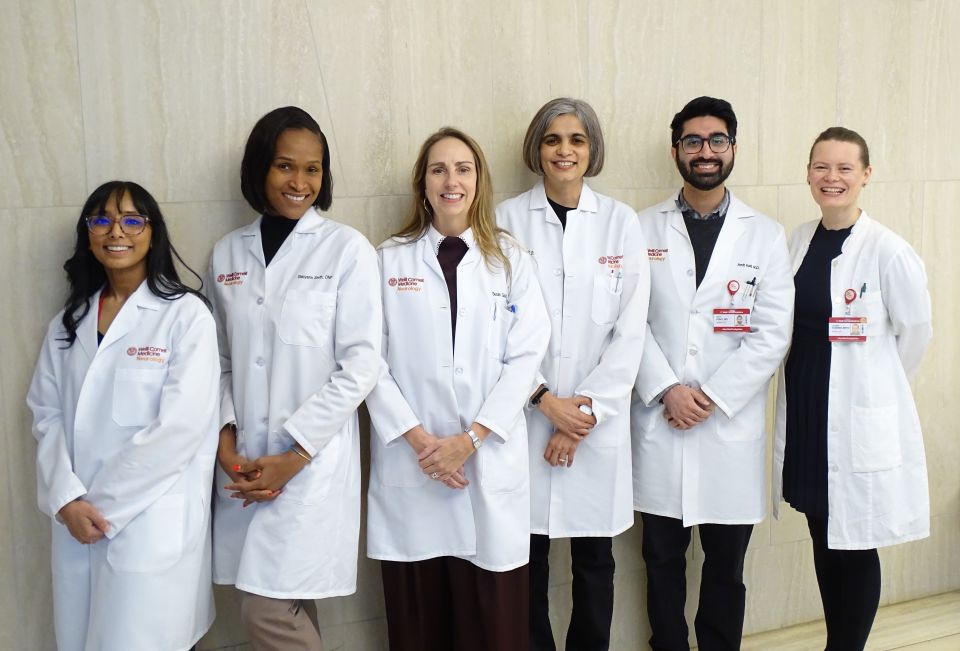
Learn more about our team of leading specialists brings together expertise across neurology, neuro-ophthalmology, neuropsychology, and rehabilitation medicine.
The Weill Cornell Medicine MS Center features a dedicated infusion room staffed by a specialized team of infusion nurses with expertise in the most advanced MS therapies. Thoughtfully designed to make treatment as comfortable and stress-free as possible, patients relax in ergonomic recliners in a serene, private environment while receiving personalized IV disease-modifying treatments.
The Weill Cornell Medicine Multiple Sclerosis Center is dedicated to improving the lives of people living with MS through comprehensive, personalized care. We bring together leading clinicians and researchers to improve outcomes today while advancing treatments for tomorrow.
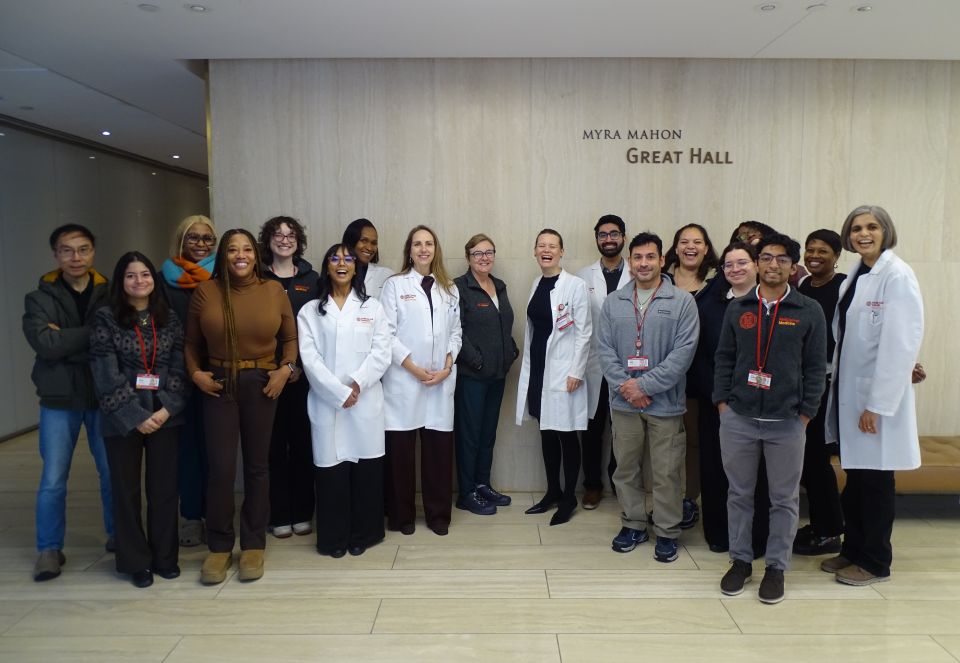
Weill Cornell Medicine Multiple Sclerosis Center 1305 York Ave., Second Floor New York, NY 10021
Phone: (646) 962-9800
Fax: (646) 962-0390
Our neurologists develop individualized treatment plans using advanced diagnostic tools and the most current therapies. Care may include disease-modifying treatments, symptom management, and coordinated rehabilitation services tailored to each patient’s needs.
Nurses provide education and ongoing support related to medications, symptom management, and daily living with MS. Clinical social workers offer individualized guidance and help patients and families navigate emotional, cognitive, and practical challenges associated with the disease.
The Weill Cornell Medicine MS Center features a dedicated infusion room staffed by a specialized team of infusion nurses with expertise in the most advanced MS therapies.
Research is a core mission of the MS Center. Our clinical, translational, and basic science programs focus on limiting disability, restoring function, and advancing new treatments for multiple sclerosis. Patients may have opportunities to participate in clinical trials evaluating novel therapies designed to slow disease progression and promote repair.
Our research spans neuroscience, immunology, genetics, and advanced imaging, including efforts to better visualize axons and myelin and to develop regenerative strategies for MS.
Patients benefit from coordinated care with specialists in neuro-ophthalmology, rehabilitative medicine, urology, neuropsychology, neuroradiology, and neurosurgery. Physical and cognitive rehabilitation services are integrated into care to support function, independence, and quality of life.
This presentation will examine the relationship between inflammation, immune regulation, and multiple sclerosis through a nutrition and...