
Providers MS Center

Our Providers

Learn more about our team of leading specialists brings together expertise across neurology, neuro-ophthalmology, neuropsychology, and rehabilitation medicine.

Conditions We Treat

  • Multiple sclerosis
  • Clinically isolated syndrome
  • Radiologically Isolated Syndrome
  • Neuromyelitis optica
  • Optic neuritis
  • Transverse myelitis
  • Acute Disseminated Encephalomyelitis
  • Autoimmune Encephalitis
  • CNS Vasculitis

Infusion Therapy

The Weill Cornell Medicine MS Center features a dedicated infusion room staffed by a specialized team of infusion nurses with expertise in the most advanced MS therapies. Thoughtfully designed to make treatment as comfortable and stress-free as possible, patients relax in ergonomic recliners in a serene, private environment while receiving personalized IV disease-modifying treatments. 


About the Multiple Sclerosis Center

The Weill Cornell Medicine Multiple Sclerosis Center is dedicated to improving the lives of people living with MS through comprehensive, personalized care. We bring together leading clinicians and researchers to improve outcomes today while advancing treatments for tomorrow.
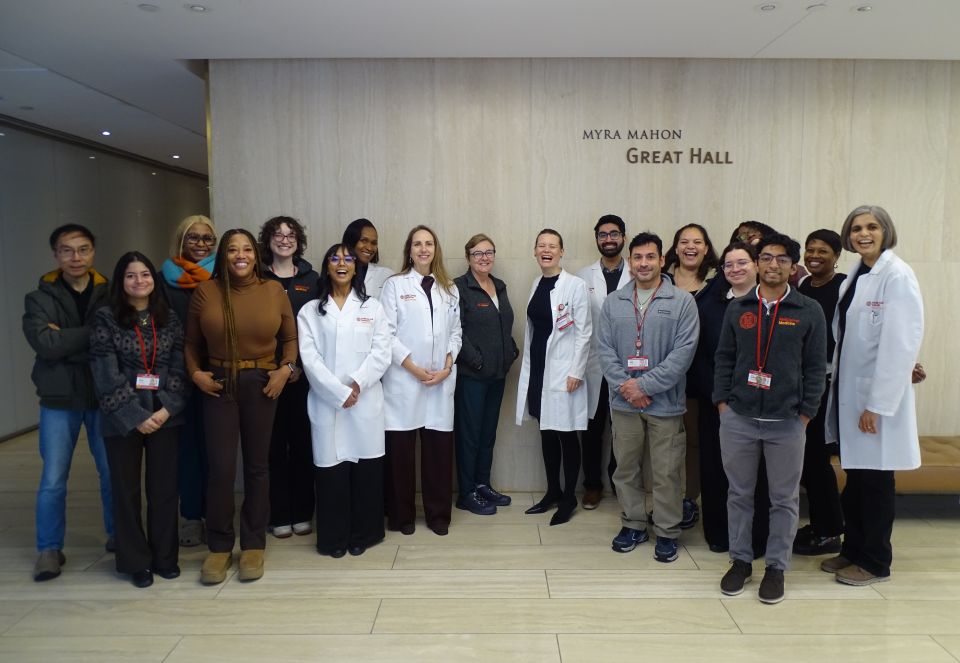
Our mission is to:

  • Provide multidisciplinary care that addresses the medical, cognitive, emotional, and rehabilitative needs of patients and families.
  • Limit disability and restore function through innovative diagnostics, therapies, and clinical trials.
  • Advance clinical, translational, and basic research to identify new multiple sclerosis treatments and regenerative strategies.
  • Translate discovery into real-world impact through collaboration across neurology, imaging, immunology, and genetics.

group photo

Weill Cornell Medicine Multiple Sclerosis Center 1305 York Ave., Second Floor New York, NY 10021

Phone: (646) 962-9800
Fax: (646) 962-0390


What We Offer


Personalized, Multidisciplinary Care

Our neurologists develop individualized treatment plans using advanced diagnostic tools and the most current therapies. Care may include disease-modifying treatments, symptom management, and coordinated rehabilitation services tailored to each patient’s needs.

Nurses provide education and ongoing support related to medications, symptom management, and daily living with MS. Clinical social workers offer individualized guidance and help patients and families navigate emotional, cognitive, and practical challenges associated with the disease.

Infusion Therapy

The Weill Cornell Medicine MS Center features a dedicated infusion room staffed by a specialized team of infusion nurses with expertise in the most advanced MS therapies.

Research and Clinical Trials

Research is a core mission of the MS Center. Our clinical, translational, and basic science programs focus on limiting disability, restoring function, and advancing new treatments for multiple sclerosis. Patients may have opportunities to participate in clinical trials evaluating novel therapies designed to slow disease progression and promote repair.

Our research spans neuroscience, immunology, genetics, and advanced imaging, including efforts to better visualize axons and myelin and to develop regenerative strategies for MS.

Specialty Services

Patients benefit from coordinated care with specialists in neuro-ophthalmologyrehabilitative medicineurologyneuropsychologyneuroradiology, and neurosurgery. Physical and cognitive rehabilitation services are integrated into care to support function, independence, and quality of life.



Events

Apr 08

Neurology Grand Rounds

Apr 08 to 9:30am
Lecture Topic: "Cancer Immunotherapy and Neurological Toxicities" Sarah Wesley, MD, MPH Assistant Professor of Neurology Columbia University...

Mar 27

Breathe, Stretch, Visualize: Yoga Session

Mar 27 to 1:00pm
Breathe, Stretch, Visualize: Yoga Session Presented by Kristin Law Yoga Instructor Schedule: 11:00 AM - 12:00 PM | Yoga Session 12:00 PM...


Our ProvidersOur ProvidersOur ProvidersOur Providers
Featured articles


Source

Source of toxin that has been postulated to cause MS lesions may be food

The bacterial epsilon toxin has been proposed as a possible cause of new MS lesion formation.  How people may be exposed to this toxin and the bacteria that produce it are unknown.  To try and determine how humans may become colonized or infected with these types of bacteria, 216 food samples from New York City groceries were tested.  Of the 216 samples, three were positive for the epsilon toxin-producing bacteria, suggesting that humans may be exposed to the bacteria by consuming contaminated...
The

The Association of Obesity and Brain Volume Loss in MS

Researchers at the Unversity of California, San Francisco, recently published results of their study examining the assocaition between obesity and Vitamin D status and brain volume on MRI. They choose brain volume loss measurement as this is an indication of neurodegeneration.469 patients with clinically isolated syndrome ( CIS) or relapsing remitting MS (RRMS)  who were followed for 5 years participated this study.Previous sutdies have reported several environmental risks for MS, including ,...